Physical Address
304 North Cardinal St.
Dorchester Center, MA 02124
Physical Address
304 North Cardinal St.
Dorchester Center, MA 02124

Mastering a silent mind for emotional stability
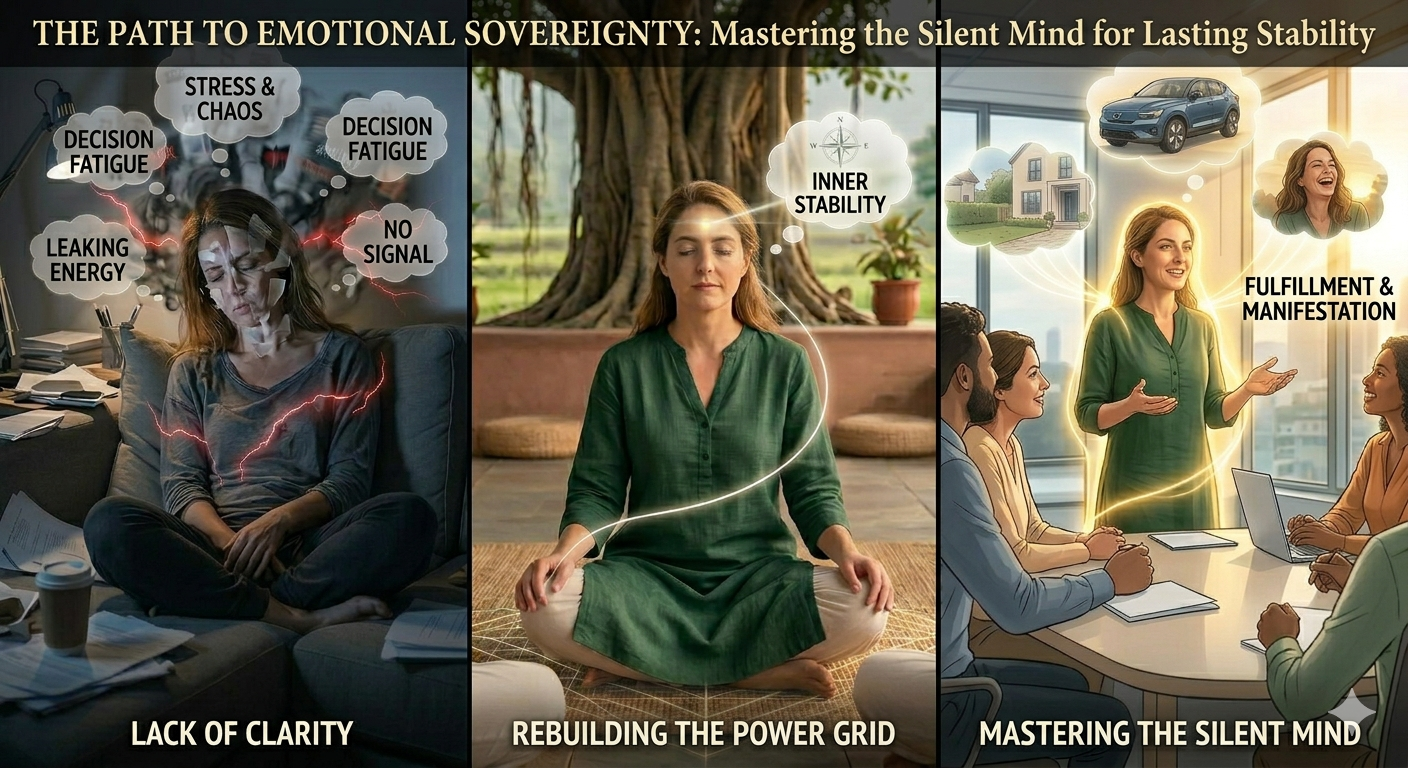
Most people approach a noisy mind like a battlefield, trying to fight, suppress, or “shout down” their thoughts. But true emotional stabilization doesn’t come from winning a war against your mind; it comes from ending the war entirely.
Based on the core principles of the Enlightened Use of the Mind, here is how you can transition from mental chaos to profound inner stillness.
The most common mistake is trying to “force” the mind to be quiet. This creates a “controller” thought—a secondary layer of mental activity where the mind simply fights itself.
To stabilize your emotions, you must learn to treat your thoughts like clouds drifting across an expansive sky. You are the sky; the thoughts are merely the weather.
True stability begins the moment you realize there is a difference between the thought and the awareness that sees the thought. This is the “Cognitive Gap.”
The mind is often noisy because it has been given “mastery” over your life. It has become a 24/7 narrator that never shuts off.
Emotional stabilization involves returning the mind to its proper role: a functional tool. Use it for planning, solving problems, or learning, and then “put it down” when the task is finished. When the mind is no longer the master, it loses the habit of constant, superfluous chatter.
The mind is like waves on the surface of the ocean. No matter how violent the storm is on top, the depths of the ocean remain undisturbed.
You don’t need to “create” silence; the silence is already there, underneath the noise. It is the silent presence within you that sees everything. By stepping back from the waves and sinking into the depth, you reveal the peace that was never actually gone.
Knowing that silence exists is one thing; staying in that silence while life is happening is another.
In our 90-Day Program at YogicScience India, we move beyond the theory of “watching thoughts.” we provide the Structured Emotional Stabilization techniques required to:
Stop Fighting Your Mind. Start Mastering Your Awareness. Join the 90-Day Program Today.